
Seeing What Is Hidden
Have you ever tried to identify the inconsistencies between what you believe and how you live? Some inconsistencies are so intertwined with how we live our lives that they can be surprisingly difficult to recognize.
Seeing inconsistencies can be a little like looking at an autostereogram – one of those images that at first appears to be nothing more than a pattern of colors. The hidden image (representing our inconsistency) is there, but you will not see it by simply glancing at the image. You have to stop, focus differently, and learn to look beyond the obvious. Recognizing the inconsistencies within our own lives can require a similar deliberate, concerted effort.
Can you see the squirrel hidden in the autostereogram below?
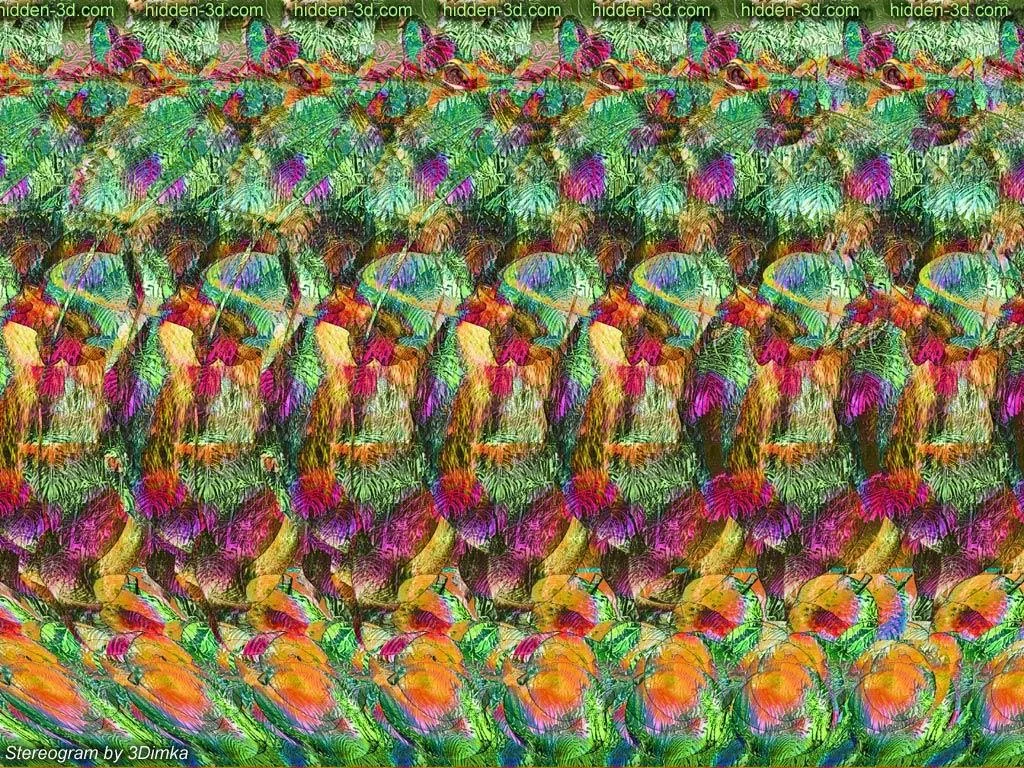
On the surface, our behavior may seem perfectly consistent with what we believe. We have good intentions, and our motives may seem pure. And that makes it all the more difficult to see a contradiction that might be obvious to someone else.
Recognizing inconsistency in ourselves often requires more than a casual glance inward. It requires deliberate self-examination. We have to be willing to look at ourselves from a different perspective – to hold our motives, judgments, words, and actions up against the light and ask ourself whether what we see on the outside truly matches what is happening within.
Like the hidden image in an autostereogram, the inconsistency may have been there all along. The challenge is learning to spot it.
The Mask of Hypocrisy
There is a word for this kind of inconsistency: hypocrisy.
The Greek word translated hypocrite was originally used of an actor who performed behind a mask. By the first century, the idea of performing behind a mask had taken on a moral meaning. It described a person who feigned virtue – someone whose outward appearance did not correspond with inward reality.
A hypocrite wears a virtuous mask. But the mask is not always worn for the benefit of others. Sometimes we wear the virtuous mask for ourselves – to soften, conceal, or justify something within us that we would rather not confront. We construct an image of ourselves that is easier to live with, an image that seems to be inline with our ideas, and over time we may begin to believe it. The mask becomes bonded to the way we see ourselves. What began as a covering gradually becomes part of our self-perception, and this is one reason hypocrisy can be so difficult to recognize. Without realizing it, we have allowed the mask to become a means of deceiving ourselves.
Jesus used some of His strongest language when confronting those who had become blind to the contradiction between what they professed and what they actually were. Again and again, He called out hypocrisy and exposed what lay beneath the outward appearance.
And here is where we must be careful.
When Scripture Becomes a Mirror
When God gave us the Holy Bible, He did not preserve these accounts merely so that we could recognize the hypocrisy of people who lived two thousand years ago. Yet that is an easy trap to fall into. We read the accounts of Jesus confronting hypocrites and think, Yes, I see their hypocrisy. Jesus was right to call them out.
But these passages were also meant to turn our eyes inward.
Jesus told of a Pharisee who stood praying:
“God, I thank You that I am not like other people: swindlers, crooked, adulterers, or even like this tax collector.” – Luke 18:11
There is a sobering irony here. We can read about the Pharisee looking down upon the tax collector and then, without realizing it, look down upon the Pharisee in exactly the same way. Even a warning about hypocrisy can become an occasion for hypocrisy if we use it only to diagnose someone else.
Thank God I am not like him.
And suddenly the passage has become a mirror.
The Pharisee was wearing a mask of virtue – a mask that allowed him to see himself as righteous, faithful, and perhaps even as a keeper of the truth. But the image he had constructed of himself prevented him from seeing the truth he most needed to see: the truth about himself.
That is the danger of the mask. It does more than conceal something from other people. It can obstruct our own vision. We become so accustomed to seeing ourselves through it that we no longer recognize the contradiction beneath it.
The Mask Must Come Off
Scripture repeatedly calls us to repentance. And repentance is more than feeling regret over something we have done. At its heart, repentance involves a change of mind – turning away from what is false and toward the truth of God as revealed in His Word. It requires a moral and spiritual reorientation.
To remove the mask requires exactly that kind of honesty – a willingness to think differently about ourselves, to surrender the comforting image we have constructed, and to allow God to show us what is actually there.
Living Comfortably With Sin
It is important, however, not to confuse every instance of sin with hypocrisy. A Christian can know what is right, fail to do it, recognize that failure, and repent. That is sin and human weakness, but it is not necessarily hypocrisy. Hypocrisy begins to emerge when we protect our image of ourselves from the truth – when we minimize, rename, excuse, or accommodate what we know to be wrong.
For Christians, hypocrisy can become the means by which we learn to live comfortably with our sin. The mask allows us to condemn a sin in principle while quietly accommodating some expression of it in our own lives.
The mask whispers:
- That wasn’t really lust. I was only looking. At least I would never commit adultery.
- It wasn’t cruel. I was just angry – and I had every right to be.
- It wasn’t gossip. I only told her because I was concerned.
- I’m not envious. I just think she gets more attention than she deserves.
- I’m not vain. I just care about looking my best.
- I’m not unforgiving. I have forgiven him – I simply want nothing to do with him ever again.
In each case, the mask does something similar: It makes the sin more comfortable. It allows us to acknowledge the biblical standard while quietly creating an exception for ourselves.
We continue believing the truth while constructing explanations that prevent that truth from fully confronting us. Behind the mask, we tell ourselves, I know the standard is true, but I have found a way to see myself as faithful to it without allowing that standard to judge what I am actually doing.
And that may be one of hypocrisy’s most dangerous qualities: it does not always require us to reject the truth. Sometimes it merely helps us find a way to live with the contradiction.
Living Without the Mask
Perhaps that is why hypocrisy deserves such careful attention in the Christian life. The danger is not only that we might deceive others, but that we might become so comfortable with the mask that we no longer recognize it as a mask. Like the hidden image in an autostereogram, the contradiction may be there long before we learn to see it. So we should not wait for someone else to expose it for us. We should ask God to search us, to reveal where our beliefs and our lives have quietly drifted apart, and to give us the humility to repent.
The goal is not to become skilled at identifying hypocrisy in others, but to become increasingly unwilling to tolerate it in ourselves. The mask must come off – not so that we may be shamed, but so that we may live honestly before God, allowing His truth to transform not only what we profess, but who we are.