The Beginning
Many people become uneasy when discussion turns to the question of beginnings. This unease often arises from an explanatory gap their worldview cannot adequately address. Rather than examining the origin of events, the focus is moved to what is believed to be known. Yet if the beginning cannot be explained, confidence in present related observations is necessarily limited. In science, a mistaken assumption that A caused B often results in later observations interpreted in a way that must align with that initial belief, reinforcing the original error. This reflects the current state of cosmological research. God created the universe and life.
Scientists commonly state that they can describe conditions in the universe as early as 10⁻⁴³ seconds after the Big Bang. They also acknowledge, however, that current theories break down at that point and cannot account for what – if anything – preceded 10⁻⁴³. Interestingly, some scientists speculate that “matter and energy may not have existed yet.” Science is defined as “systematic knowledge of the physical or material world gained through observation and experimentation.” Speculation, regardless of its sophistication, does not meet that standard.
Nevertheless, while considerable confidence is placed in speculative accounts of what might have preceded that 10⁻⁴³ instant, the possibility that God spoke the universe into existence is often dismissed outright. One need not be a MacArthur Fellow to recognize that this reflects a selective application of skepticism.
Scientists themselves acknowledge that the universe had a beginning, yet they cannot explain it. When attempts are made to account for how the universe began, failure is inevitable – not because the question is inherently unanswerable, but because certain explanations are excluded in advance. As long as God is ruled out from the outset, explaining “the beginning” becomes an exercise in futility. Rather than confronting this limitation, rationalizations are often employed that make the exclusion appear methodological rather than philosophical. Over time, this posture becomes stated as fact in educational materials and is seldom questioned.
The Bible offers a different account: “In the beginning God created the heavens and the earth.” Here, “beginning” signifies more than a point on a timeline; it denotes the origin of all that exists. Prior to that moment, there was no framework for the reality we know. There was no gravitational singularity. Everything humanity can observe, measure, and reason about emerged from that starting point. The Creator, however, is not bound by “the beginning,” because He existed before it.
Anyone who accepts the Big Bang as the most plausible account of the universe’s origin must also accept what science itself concedes: it cannot explain why the universe began, what caused it, or whether anything preceded it. That is not a minor gap in understanding – it is a profound one. The fact is the universe was created by God. Any scientific speculation of “A causing B” is invalid because science has excluded the possibility of the existence of God.
Life
When scientists explore the origin of life, they mistakenly exclude God as the Creator of life in order to be in alignment with the perspective that rules out God as the Creator of the universe. They compulsorily synchronize with the original error made in cosmology.
DNA, or deoxyribonucleic acid, is the hereditary material in plants, humans, and all other organisms (some viruses have RNA). DNA carries the genetic instructions essential for the development, functioning, growth, and reproduction of life. Without DNA (or RNA in some cases) life cannot exist in any form. Most people have no idea “how” DNA works. The video below demonstrates the extraordinarily complicated structure and functions of DNA:
There is no possibility that these processes, required for life, happened (were ignited) through natural, evolutionary processes.
The basics of life
There are certain fundamental, organized chemistry processes that are needed for life to maintain, grow, reproduce, and persist as living systems:
- Metabolism (energy processing / obtaining & using energy)
- Homeostasis (regulation / maintaining internal stability)
- Response to stimuli (irritability / sensitivity)
- Growth and development
- Reproduction (ability to produce new individuals)
- Nutrition (acquiring raw materials)
- Respiration (gas exchange + cellular energy release)
- Transportation / Circulation
- Excretion (removal of metabolic wastes)
And all living organisms share certain fundamental components and features that enable these fundamental, organized chemistry processes:
- Genetic Material (Nucleic Acids)
- Proteins
- Cell Membrane (Lipid Bilayer)
- Energy Currency (ATP and Metabolic Pathways)
- Water as a Solvent
- Chemical Building Blocks (Elements and Small Molecules)
Abiogenesis – an extraordinarily weak hypothesis about the origin of life
Abiogenesis is scientific hypothesis that life originated from non-living matter through natural processes. As a reminder, a hypothesis is a specific, testable prediction or explanation for a phenomenon, while a theory is a well-established framework that explains a broad range of observations and is supported by extensive evidence. Theories are generally more comprehensive and have undergone more rigorous testing than hypotheses. Interestingly, sometimes you will see abiogenesis called a theory – but it does not meet the criteria of being a theory. Calling it a theory is disingenuous – it is a weak hypothesis at best.
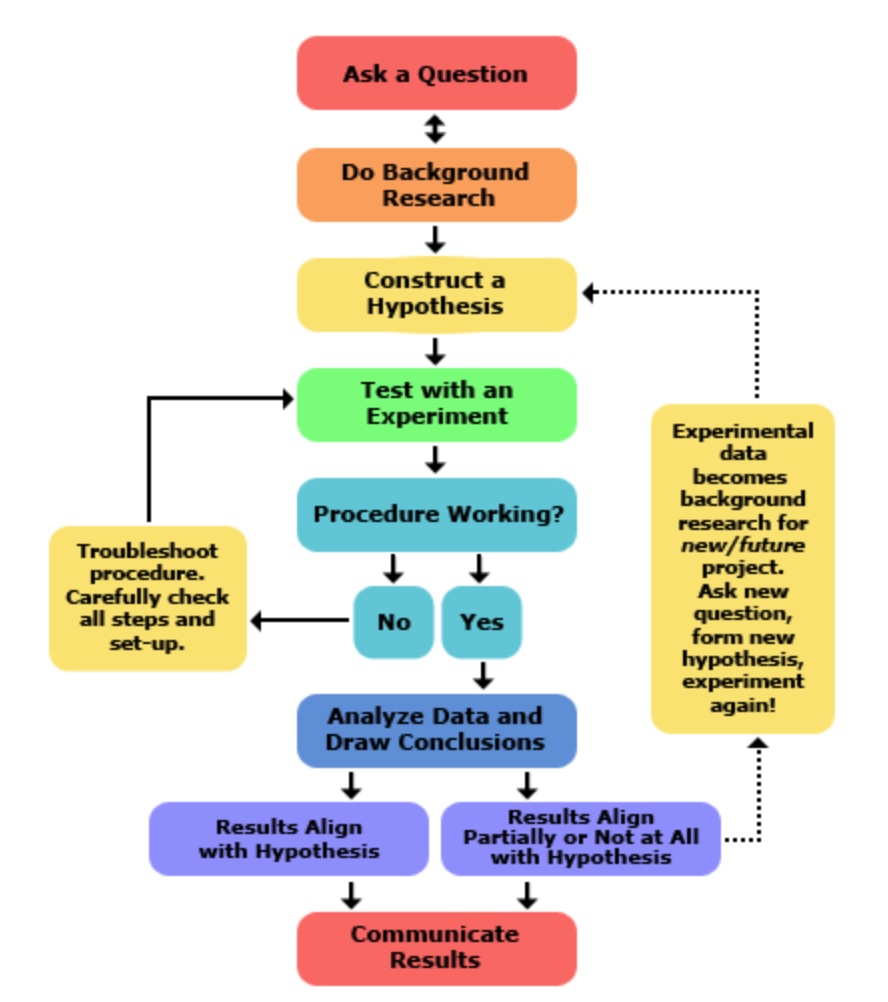
Abiogenesis is the prevailing scientific idea of the origin of life – though the majority of the secular believing world have no real idea what their belief is based on. And they certainly haven’t challenged it.
73 years ago, in 1952, the Miller-Urey Experiment propelled abiogenesis to prominence. Stanley Miller, a graduate student at the University of Chicago, simulated early Earth conditions in a lab: a flask with water (representing oceans), gases like methane (CH₄), ammonia (NH₃), hydrogen (H₂), and carbon dioxide (CO₂), heated and zapped with electric sparks (mimicking lightning). After a week, the mixture turned brown and contained amino acids (e.g., glycine, alanine). Follow-up experiments (including modern ones adjusting for a less reducing atmosphere, like with CO₂ and N₂) have produced over 20 amino acids, sugars, lipids, and nucleotide bases.
There have been some additional ideas that scientists have proposed that supposedly support the concept of abiogenesis but they are even weaker than the Miller-Urey experiment. So that’s essentially it. That is the basis of abiogenesis that the vast majority of the secular world believes in. I invite you to look in to what they call “supporting evidence” and then question what they propose.
Even though the idea is extraordinarily weak, it’s what is taught as fact in schools. But when you’ve excluded God you need a documented idea about how life started. And students believe it without challenging. It is an enormous leap to believe that simple prebiotic (before life) chemistry, like the organics produced in Miller-Urey-style experiments, transitioned to the kind of sophisticated, coordinated, error-correcting replication, transcription processes, and a functional ribosome-like system shown in video above. Abiogenesis is a mistake built on the fact that science excludes God. The fact is God spoke life in to existence.
Man’s mantle of primacy
Much of secular humanity arrogantly claims the mantle of primacy – an assertion undone by the kingdom of God. Mankind is more like an insect – without awareness or understanding but determined to move through life as though there was no higher power, no Creator. If you use your cognitive abilities, without assuming the lies of scientific universe and life beginnings you will understand why 80–90% of people worldwide say they believe in God or a higher power.
While the existence of God cannot be demonstrated with absolute proof, the cumulative weight of evidence strongly suggests that He does exist. Embracing this conclusion is not a blind leap into the dark, but a step of trust out of darkness and into a well-lit room, where many things come into clearer focus.
Related content: The wonderful Jesus the Christ